
How to Evaluate and Choose the Right International 3D Rendering Studio
Selecting an international 3D rendering studio based solely on an impressive online portfolio is one of the most common pitfalls architectural firms encounter. A visually stunning render proves artistic ability, but it does not guarantee that an overseas partner can meet strict project deadlines, maintain clear communication, or adhere to rigorous quality standards.
For global architects, real estate developers, and interior design firms, outsourcing visualization is about building a reliable extension of their in-house team. Evaluating potential partners requires looking beyond surface aesthetics and examining their underlying operational discipline.
Why Overseas ArchViz Selection Extends Beyond Visual Aesthetics
When managing high-stakes commercial or residential projects, friction during the visualization phase can delay investor pitch meetings and client presentations. Selecting the wrong rendering partner often leads to missed milestones, miscommunicated design revisions, and bloated budgets.
A disciplined international 3D rendering studio mitigates these risks by establishing clear operational protocols long before production begins. Choosing a studio with strong management structures ensures smooth project execution across different time zones and cultural contexts.
Key Criteria for Assessing an International 3D Rendering Studio
To ensure a successful long-term partnership, evaluate prospective visualization studios against three core operational benchmarks.
1. Communication Flow and Daily Responsiveness
Failing to establish clear communication channels is the primary cause of project delays in remote rendering workflows.
- Structured Daily Updates: Verify whether the studio provides end-of-day progress reports, draft previews, and structured feedback logs.
- Fluency in Architectural Terminology: Ensure the project management team understands complex CAD drawings, BIM models, and technical material schedules without requiring repetitive clarification.
- Time Zone Alignment: Confirm that the studio maintains overlapping working hours or dedicated account managers to handle urgent revision requests promptly.
2. Internal Quality Control Protocols (QA/QC)
Receiving client draft previews filled with obvious errors like floating furniture, light leaks, or incorrect material textures wastes valuable review time.
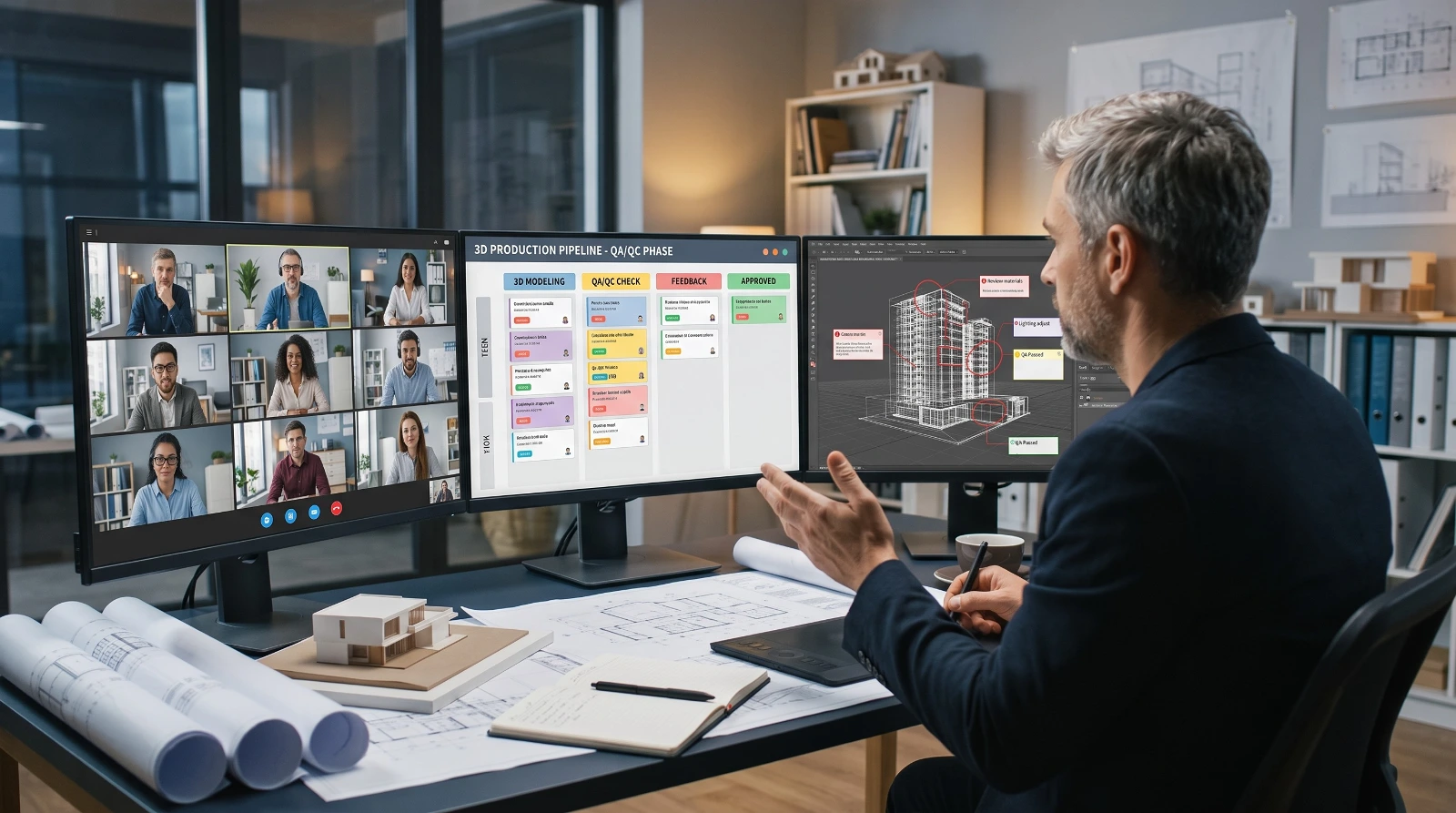
A mature international 3D rendering studio enforces multi-stage internal review checkpoints. Before any render draft reaches your inbox, senior art directors should inspect camera angles, global illumination accuracy, scale proportion, and background entourage integration.
3. Data Security, Asset Management, and NDA Compliance
Architectural concepts often involve proprietary designs, sensitive land acquisitions, or confidential client details.
- Strict NDA Enforcement: Confirm that the studio signs comprehensive Non-Disclosure Agreements prior to receiving project files.
- Secure Asset Storage: Assess their file transfer protocols, cloud storage security, and digital asset management systems to ensure your CAD and BIM data remains fully protected.
Integrating Remote Visualization into Your Design Workflow
Partnering with an overseas rendering studio should simplify your workload, not add administrative overhead. Establishing standardized file transfer protocols, folder hierarchies, and feedback templates during onboarding ensures seamless integration from day one.
Choosing a disciplined international 3D rendering studio allows your firm to scale production capacity, meet tight presentation deadlines, and deliver world-class visual assets to clients worldwide.
Ready to streamline your architectural visualization pipeline with a trusted global partner? Discover our specialized rendering solutions at Our-Inspiration Studio.
